Showing posts with label Obesity Epidemic. Show all posts

Sunday, December 31, 2006

2006 TOP TEN Number 3

At the beginning of the year, Men' s Fitness released its annual list of the nation's fattest cities. Chicago and Houston ranked one and two, respectively while Detroit came in third. Soon after, the war on obesity began. At first members of the American Medical Association called for a 'fat tax' on soda. There calls were not unjustified; Americans have sipped and slurped their way to fatness by drinking far more soda and other sugary drinks over the last four decades, a new scientific review concludes. An extra can of soda a day can pile on 15 pounds in a single year.

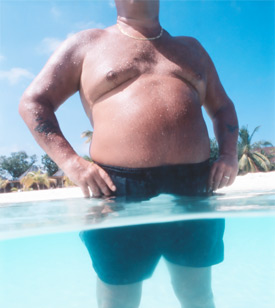
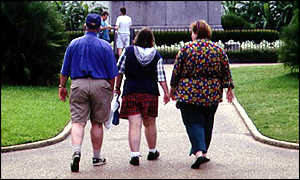
The war on obesity was not confined by borders. Several towns and cities throughout the United Kingdom called for bans on shirtless men. The proposal was inspired by the least attractive side effect of the summer heatwave - the tendency of a number of often middle-aged men to go about in nothing more than shorts. There was a wave revulsion among most of the public at the summer's least welcome fashion trend.

But back in the states, more and more obese people are unable to get full medical care because they are either too big to fit into scanners, or their fat is too dense for X-rays or sound waves to penetrate. With 64 percent of the U.S. population either overweight or obese, the problem is worsening, but it represents a business opportunity for equipment makers and hospitals.Radiologists have their own term for it when writing up reports: "These images are limited due to body habitus."

Then the war on obesity shifted fronts and trans fats became a direct target. Three years after the city banned smoking in restaurants, health officials in New York unveiled a proposal that would bar cooks at any of the city's 24,600 food service establishments from using ingredients that contain the artery-clogging substance, commonly listed on food labels as partially hydrogenated oil. Artificial trans fats are found in some shortenings, margarine and frying oils and turn up in foods from pie crusts to french fries to doughnuts. But before the ban was raitifed earlier this month, KFC said it would phase out trans fats in all of its products. This would mean a total reinvention of their cooking oil used to fry almost everything on their menu from Original Recipe to potato wedges. In NY restaurants will be barred from using most frying oils containing artificial trans fats by July '07 and will have to eliminate the artificial trans fats from all of their foods by July 2008.
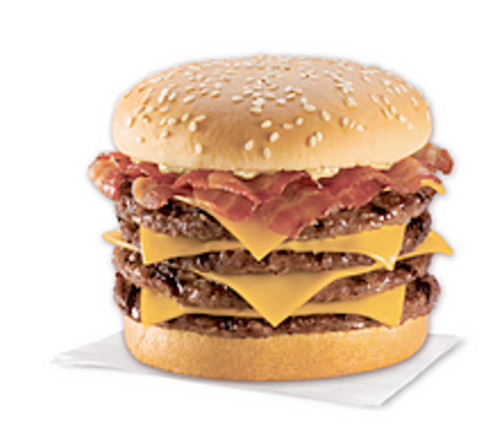
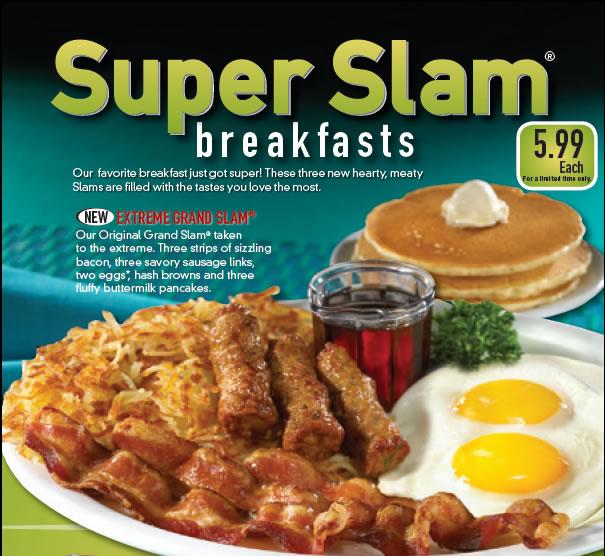
But bans and outcries did not stop some restaraunts from producing ultimate, fat-laden dishes. For a limited time only, Denny's Restaraunts featured a new grand slam breakfast called the Extreme Grand Slam. This breakfast has twice the amount of food as the Original Grand Slam containing 1,475 calories, 85 grams of fat, and 23 grams of saturated fat. And the debut of Burger King's BK Stackers were no better. The line included a Quad Stacker option of four slabs of beef, four slices of cheese and up to eight slices of bacon -- "smothered," as the company puts it, in a creamy sauce. The behemoth sandwich contains 1,000 calories and a whopping 68 grams of fat, including 30 grams of saturated fat.

Tuesday, December 05, 2006

UPDATE NYC Bans Trans Fats

from My Way News

The Board of Health voted Tuesday to make New York the nation's first city to ban artery-clogging artificial trans fats at restaurants - from the corner pizzeria to high-end bakeries. The board, which passed the ban unanimously, did give restaurants a slight break by relaxing what had been considered a tight deadline for compliance. Restaurants will be barred from using most frying oils containing artificial trans fats by July and will have to eliminate the artificial trans fats from all of their foods by July 2008. But restaurant industry representatives called the ban burdensome and unnecessary.

The ban contains some exceptions; for instance, it would allow restaurants to serve foods that come in the manufacturer's original packaging. Trans fats are believed to be harmful because they contribute to heart disease by raising bad cholesterol and lowering good cholesterol at the same time. Some experts say that makes trans fats worse than saturated fat. The panel also passed another measure that has made restaurants unhappy: Some that chose to inform customers about calorie content will have to list the information right on the menu. The rule would generally apply to fast-food restaurants and other major chains.

Trans fats are formed when liquid oils are made into solid fats by adding hydrogen in a process called hydrogenation. A common example of this is partially hydrogenated vegetable oil, which is used for frying and baking and turns up in processed foods like cookies, pizza dough and crackers. Trans fats, which are favored because of their long shelf life, are also found in pre-made blends like pancake and hot chocolate mix.

The FDA estimates the average American eats 4.7 pounds of trans fats each year. Chicago is also considering its own trans fat law, which wouldn't ban them outright but would severely restrict the amount that kitchens can use.

Monday, October 30, 2006

KFC to Ban Trans Fats

from The Detroit Free Press

KFC said it is phasing out trans fats in cooking its Original Recipe and Extra Crispy fried chicken, Potato Wedges and other menu items. Trans fats are believed to raise consumer cholesterol levels. The restaurant chain said it will start using zero trans fat soybean oil systemwide with the rollout expected to be completed by April 2007. KFC said many of its approximately 5,500 restaurants already have switched to low linolenic soybean oil, replacing partially hydrogenated soybean oil.

Crispy Strips, Wings, Boneless Wings, Buffalo and Crispy Snacker Sandwiches, Popcorn Chicken and Twisters also are part of the menu change. The announcement came just ahead of a New York City Board of Health public hearing on a plan to make New York the first U.S. city to ban restaurants from serving food containing artificial trans fats. Artificial trans fat is so common that the average American eats 4.7 pounds of it a year, according to the Food and Drug Administration. But health officials say trans fat belongs in the same category as food spoiled by poor refrigeration or rodent droppings.

Sunday, October 08, 2006

UPDATE Ben & Jerry's Flavor Creation Contest

from WDIV Detroit TV 4

Do you think Ritz crackers belong in ice cream? The makers of Ben and Jerry's ice cream apparently do, because they've awarded a Jacksonville, Fla., woman the top prize in their make-a-flavor contest for her cracker idea. Tasha Callister's "Puttin' on a Ritz" features a mixture of crushed, chocolate-covered Ritz cracker sandwiches filled with caramel, then mixed in vanilla ice cream with caramel and Ritz cracker swirls.

The contest judges especially liked the flavor's playful name. Ben and Jerry's will make enough "Puttin' on a Ritz" ice cream for an ice cream party for Callister, but they have no plans to put it into production.

More than 40,000 people submitted ideas for the contest.

Tuesday, September 26, 2006

NYC Mulls Ban on Trans Fats

from the Associated Press

Three years after the city banned smoking in restaurants, health officials are talking about prohibiting something they say is almost as bad: artificial trans fatty acids. The city health department unveiled a proposal Tuesday that would bar cooks at any of the city's 24,600 food service establishments from using ingredients that contain the artery-clogging substance, commonly listed on food labels as partially hydrogenated oil. Artificial trans fats are found in some shortenings, margarine and frying oils and turn up in foods from pie crusts to french fries to doughnuts.

Doctors agree that trans fats are unhealthy in nearly any amount, but a spokesman for the restaurant industry said he was stunned the city would seek to ban a legal ingredient found in millions of American kitchens.

The NY State Restaraunt Association criticizes the proposal, citing that it would create havoc. Cooks would be forced to discard old recipes and scrutinize every ingredient in their pantry. A restaurant could face a fine if an inspector finds the wrong type of vegetable shortening on its shelves. The proposal also would create a huge problem for national chains. Among the fast foods that would need to get an overhaul or face a ban: McDonald's french fries, Kentucky Fried Chicken and several varieties of Dunkin' Donuts.

A similar ban on trans fats in restaurant food has been proposed in Chicago and is still under consideration. Under the New York proposal, restaurants would need to get artificial trans fats out of cooking oils, margarine and shortening by July 1, 2007, and all other foodstuffs by July 1, 2008. It would not affect grocery stores. It also would not apply to naturally occurring trans fats, which are found in some meats and dairy.

Thursday, September 21, 2006

Ben & Jerry's New Flavor Finals


Ben & Jerry’s has narrowed down more than 40,000 suggestions for a new flavor to five finalists, and will turn their customer-creators loose next month in the “Flavor Finals,” to see which is tastiest. The five finalists get expense-paid trips to the ice cream maker’s Waterbury plant, where they will whip up their concoctions for the company’s flavor gurus in the Oct. 4-5 finals.

Here's the flavors:

ApricotAbra - a mix of apricot chunks, dark chocolate, vanilla ice cream and tart apricot preserves

Wackie Chan - sweet cream and ginger-flavored ice cream, with chocolate-covered fortune cookie bits and fudge swirl

Italian Renaissance - made of amaretto liqueur ice cream, cherry chunks and sliced almonds

Mojito - a lime-based sherbet with mint, brown sugar and rum

Puttin' on a Ritz - vanilla ice cream, caramel and Ritz crackers

UPDATE Obesity Alert


from the Sun-Sentinel


Surely every American old enough to place his own Happy Meal order knows there's an obesity epidemic in this country. Despite this -- and despite piles of research on the evils of diets high in saturated fat and sodium and low in fiber -- American fast-food chains continue to roll out bigger, fatter, more decadent fare. Consider this summer's debut of Burger King's BK Stackers, which include a Quad Stacker option of four slabs of beef, four slices of cheese and up to eight slices of bacon -- "smothered," as the company puts it, in a creamy sauce.


The behemoth sandwich contains 1,000 calories and a whopping 68 grams of fat, including 30 grams of saturated fat. According to nutritionists, that's about half the calories and 1-1/2 times the saturated fat the average adult should consume in an entire day. For its part, Burger King says it is simply giving the public what it wants.

Saturday, August 12, 2006

Total Fatness


For a limited time only, Denny's Restaraunts are featuring a new grand slam breakfast called the Extreme Grand Slam. This breakfast has twice the amount of food as the Original Grand Slam. There is something about this breakfast that everyone should know... it is absolutely and totally unhealthy. This breakfast served "as is" contains 1,475 calories, 85 grams of fat, and 23 grams of saturated fat. Based on a 2,000 calorie diet, fat allowances are as follows: 65 grams total fat of which 20 can be saturated fats. This means that you are consuming 74% of your daily caloric intake, over 130% of total fat intake, and 115% of saturated fat intake all in one meal! Extreme portions like this are leading to more unhealthy lifestyles that everyone needs to be aware of.

Wednesday, August 09, 2006

Obesity Linked to Soda


from WDIV Detroit TV 4

Americans have sipped and slurped their way to fatness by drinking far more soda and other sugary drinks over the last four decades, a new scientific review concludes. An extra can of soda a day can pile on 15 pounds in a single year, and the "weight of evidence" strongly suggests that this sort of increased consumption is a key reason that more people have gained weight.

Soft drink trends have marched lock-step with the growing obesity epidemic, but industry groups have long fought efforts to say one directly caused the other. Not all studies conclude that beverages are at fault, and the new analysis ignored some that would have discounted such a link.

Wednesday, July 26, 2006

London Considering Ban on Shirtless Men


from the Daily Mail

Men may be barred from baring their chests - and stomachs - in public under new local laws being considered by many London area town halls. They would stop men stripping off their shirts in crowded town centres and give powers to police to remove any who defy the cover-up laws.

The proposal has been inspired by the least attractive side effect of the heatwave - the tendency of a number of often middle-aged men to go about in nothing more than shorts. Last week there was a wave revulsion among most of the public at the summer's least welcome fashion trend.

Now local authorities have been circulated with a scheme for using by-laws to require shirts in town centres and to brand men who won't wear them as anti-social. The laws would operate in a similar manner to local statutes that ban drinking on the streets or which prevent gangs of youths from congregating.

Americans Too Fat for X-Rays


from Reuters

More and more obese people are unable to get full medical care because they are either too big to fit into scanners, or their fat is too dense for X-rays or sound waves to penetrate. With 64 percent of the U.S. population either overweight or obese, the problem is worsening, but it represents a business opportunity for equipment makers and hospitals.

Radiologists have their own term for it when writing up reports: "These images are limited due to body habitus."

These scans are used to look for tumors, blood clots, broken limbs and other injuries and diseased organs.

Monday, June 12, 2006

Doctors Call for 'Fat Tax' on Soda

from Daily Mail

Doctors will this week declare war on America's soft drinks industry by calling for a 'fat tax' to combat the nation's obesity epidemic.

Delegates at the powerful American Medical Association's annual conference will demand a levy on the sweeteners put in sugary drinks to pay for a massive public health education campaign.
They will also call for the amount of salt added to burgers and processed foods to be halved.
The moves come as U.S. doctors are becoming increasingly alarmed at the growing number of deaths linked to obesity.

The resolution will put doctors on a collision course with Coca-Cola and Pepsi, plus the likes of McDonald's and Burger King. Sales of soft drinks in U.S. schools are in decline ahead of the introduction of guidelines allowing only healthier low-calorie drinks, plus milk and certain fruit juices, over the next two years.

Monday, May 01, 2006

Attack On Obesity

from Reuters

Connecticut's state legislature voted on Thursday to ban sales of sodas and other sugary beverages in state elementary, middle and high schools as part of an effort to stem teen obesity.

The ban includes all regular and diet sodas, along with "electrolyte replacement beverages" such as Gatorade. The only drinks allowed to go on sale in schools would be bottled water, milk or 100-percent fruit and vegetable drinks.

A Northwestern University study released in December showed more than one in three American adolescents are physically unfit and have many of the risk factors for heart disease.

The Connecticut law, which will take effect from July, will allow soda sales at concession stands at school-sponsored events after school and on weekends. Students can also pack their own sodas and sports drinks and bring them to school.